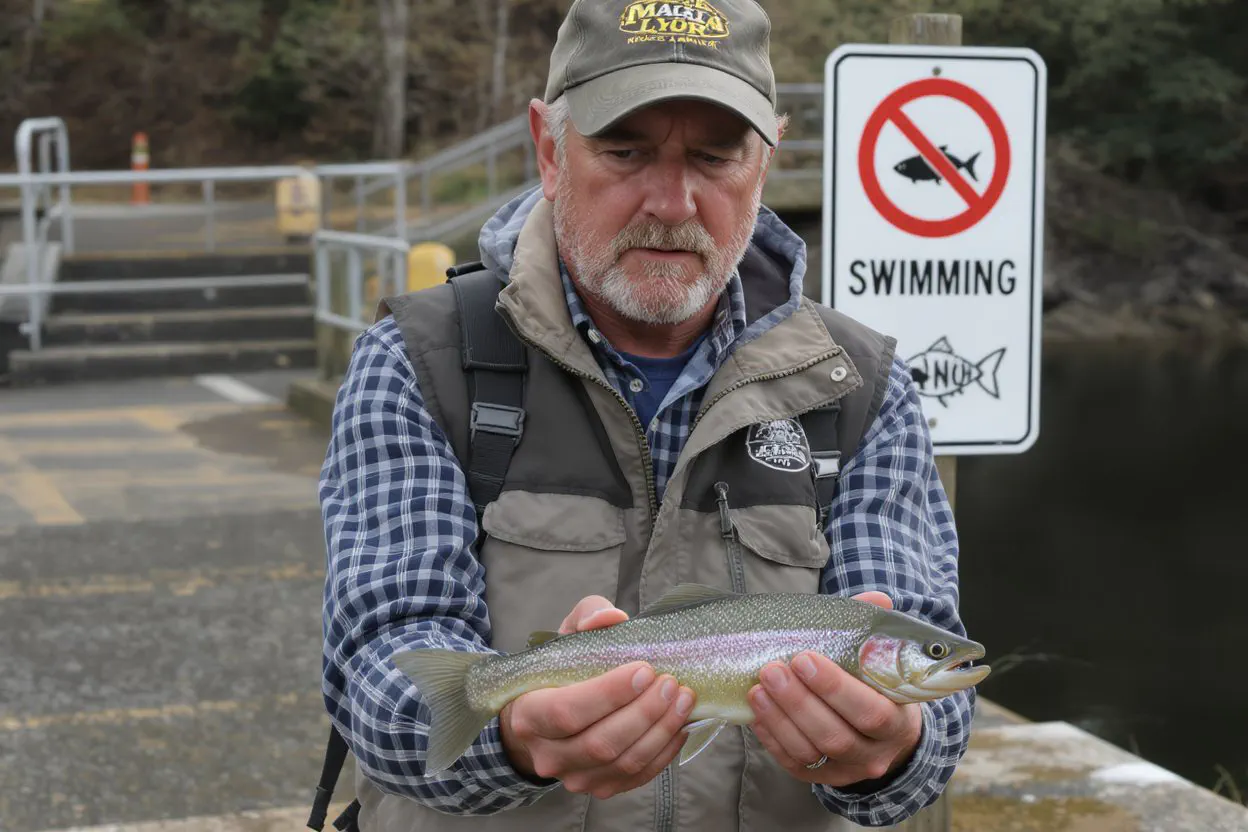
Montana’s Department of Environmental Quality and Fish, Wildlife & Parks jointly released updated PFAS advisories this week recommending that anglers limit consumption of fish from certain waterbodies, a development that has anglers grappling with an unfamiliar question: what if catching fish was the easy part?
PFAS, or per- and polyfluoroalkyl substances — sometimes called “forever chemicals” because they don’t break down in the environment, much like the political opinions of anyone who has lived in Montana for more than ten years — were detected at elevated levels in fish tissue samples from multiple locations across the state.
“We’re not saying don’t fish,” said DEQ spokesperson Linda Marsh. “We’re saying be thoughtful about consumption. Catch and release is always an option.”
“I’ve been catching and releasing involuntarily for thirty years,” said Bozeman angler Stu Haverford, 62. “Now they’re telling me the one I keep is the one I shouldn’t eat? Nature has a sense of humor.”
The advisory recommends no more than two servings per month of fish from affected waters, with specific guidance varying by species and location. Whitefish, which accumulate PFAS at lower rates, are less restricted than trout, leading to what Haverford described as “the first time in history anyone has been excited to catch a whitefish.”
State officials emphasized that the risk is cumulative and long-term, not immediate. “One fish dinner isn’t going to hurt you,” Marsh said. “It’s the repeated, sustained exposure over years that we’re concerned about.”
“So like living here,” said Haverford.
The source of PFAS contamination varies by location and includes firefighting foam, industrial discharge, and what the DEQ report simply calls “legacy contamination,” a term that covers everything from old military sites to the general, ambient consequences of twentieth-century progress.
FWP will host public information sessions throughout May. Attendance at previous PFAS sessions has been described by officials as “enthusiastic,” which in government communications typically means “angry.”
Haverford said he plans to keep fishing regardless. “I didn’t move to Montana to eat store-bought salmon,” he said. “I moved here to stand in a river and pretend the world makes sense.”
Inspired by real local coverage. No actual journalism was harmed in the making of this article.