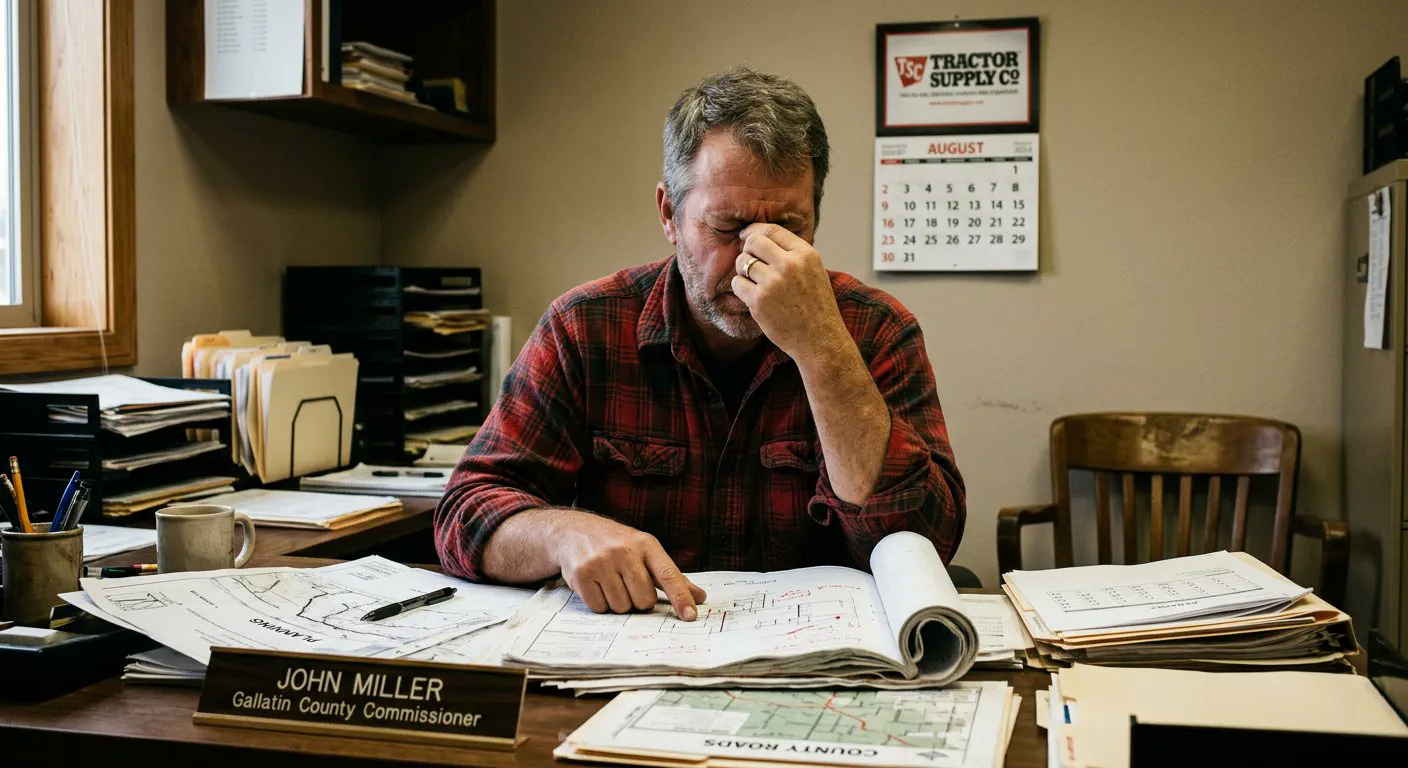
The Gallatin County Commission spent Tuesday afternoon debating the ontological status of “the cloud.” This follows a petition filed by a local coalition of residents who believe that the massive, windowless data centers being proposed for the remaining hay fields near Four Corners might, in fact, be bad for the local aesthetic of antiquity.
The ballot initiative, which sought to give citizens a direct vote on whether to allow servers to process the world’s internet traffic in our valley, has been disqualified due to a clerical oversight. It appears that the signatures, while numerous, were primarily collected on napkins from a popular downtown coffee shop and napkins are not, by statutory definition, legal instruments of municipal governance.
“We just thought that if you’re going to build a cathedral to algorithms, you should at least ask the people who have to look at it while driving their trailers to the hardware store,” said local hobby-rancher Gary Huckleberry. “If we’re going to have a giant box that processes cloud data, it would be nice if it at least blocked the wind or provided a place to hang a banner for the high school football team.”
Proponents of the facility argue that the data center is a natural evolution of the valley’s economy. Since we have already transitioned from wheat and cattle to craft breweries and boutique real estate firms, they suggest that housing the physical manifestation of the internet is the next logical step.
Others remain skeptical, noting that these structures generate a significant amount of heat. Some residents believe that if enough servers are installed, we might finally solve the problem of our dang winters by essentially turning the entire Gallatin Valley into a giant, climate-controlled server closet.
The city’s planning office maintains that the facilities are essential to modern life, noting that without them, our collective ability to post photos of our brunch or complain about traffic on social media would be significantly diminished.
There was a brief moment of hope that the servers might be disguised as historic barns, but the developers noted that the cost of reclaimed siding would exceed their budget. For now, the fields will remain open, waiting to see if they are to be filled with organic oats or gigabytes of global data.
The project is currently slated to begin as soon as the ground thaws, or perhaps a little earlier if it doesn’t snow.
Inspired by real local coverage. No actual journalism was harmed in the making of this article.