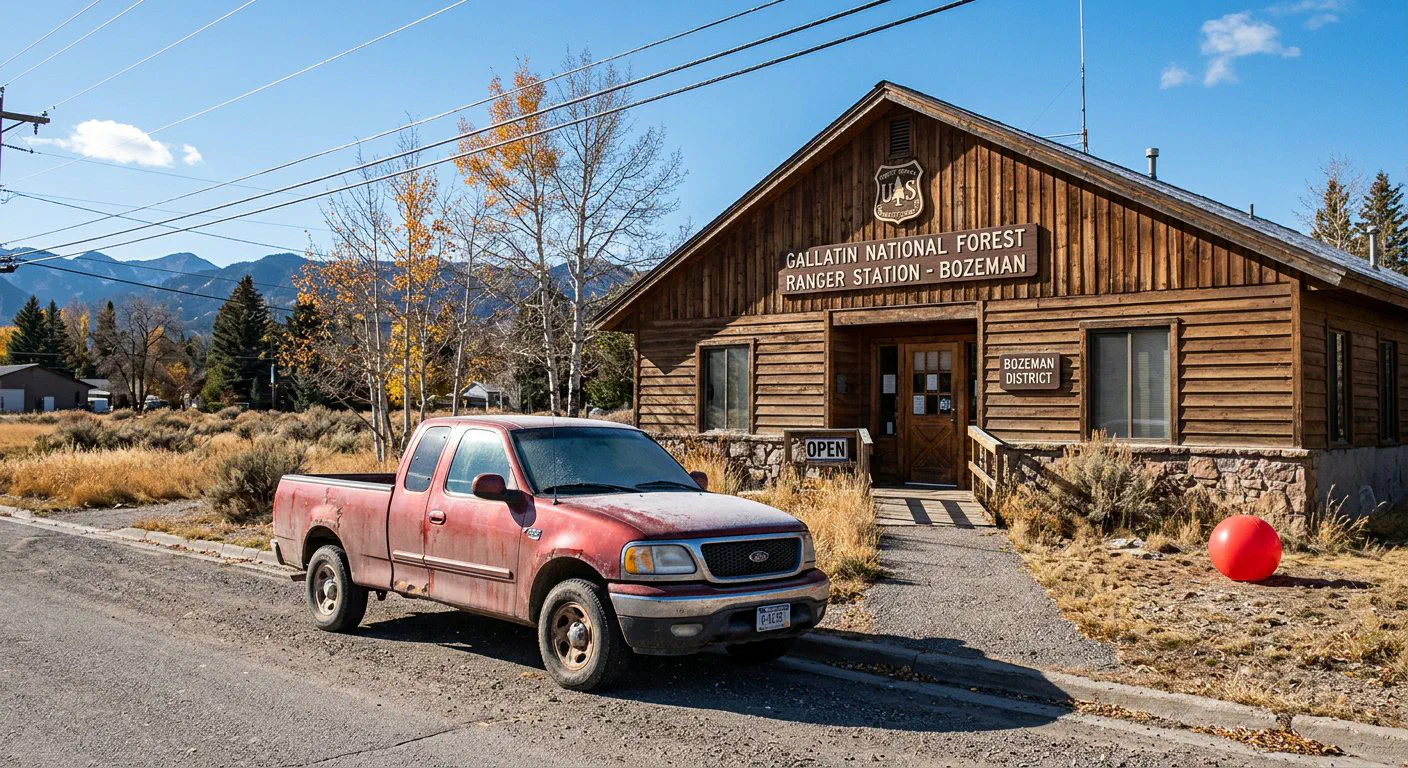
The Gallatin National Forest is a place of constant movement. Sometimes that movement is a mountain goat seeking a salt lick, and sometimes it is a six-hundred-pound slab of limestone deciding that gravity is a suggestion it would like to follow immediately.
Last Tuesday, a hiker named Brent Stiffle, who moved to Bozeman from Florida three weeks ago to pursue a career in “atmospheric vibe curation,” was struck by a falling rock near the M Trail. Mr. Stiffle was reportedly consulting his mindfulness app when the geology shifted.
The rock, an unassuming piece of grey shale, has since been placed under administrative leave. Local authorities have hauled it to a secure facility in Belgrade, where it is currently undergoing a mandatory four-hour safety and sensitivity seminar.
“It’s not that the rock is a bad rock,” explained forest ranger Gary Pith, who has patrolled these peaks since the late nineties. “It’s just that it wasn’t practicing active listening. You have to be aware of the hikers around you. If you’re going to fall, you really need to communicate your intent to the public so they have time to move their artisanal water bottles.”
The incident has sparked a lively debate on the local community boards. Many long-time residents feel that the rocks have become increasingly entitled over the last few years. They argue that the minerals used to stay put, but ever since the population boom, the geology has started mimicking the pace of the downtown real estate market.
“I remember when a rock would sit in the same drainage for fifty years without bothering anyone,” said local rancher Earl Vane, who watches the mountains from his kitchen window. “Now they’re all shifting, eroding, and causing traffic jams on the switchbacks. It’s a real disruption to the natural aesthetic.”
The rock in question remained silent during its initial hearing, offering no statement on whether it felt remorse for the bruised shoulder or the shattered phone screen. It will be released back into the wild on Friday, provided it agrees to sign a liability waiver and promises to stick to non-populated ravines.
For now, the trail remains open to the public. Hikers are reminded to keep their eyes on the peaks and their ears open for the sound of shifting sediment.
The mountain continues to shed its skin, whether the hikers are ready or not.
Inspired by real local coverage. No actual journalism was harmed in the making of this article.