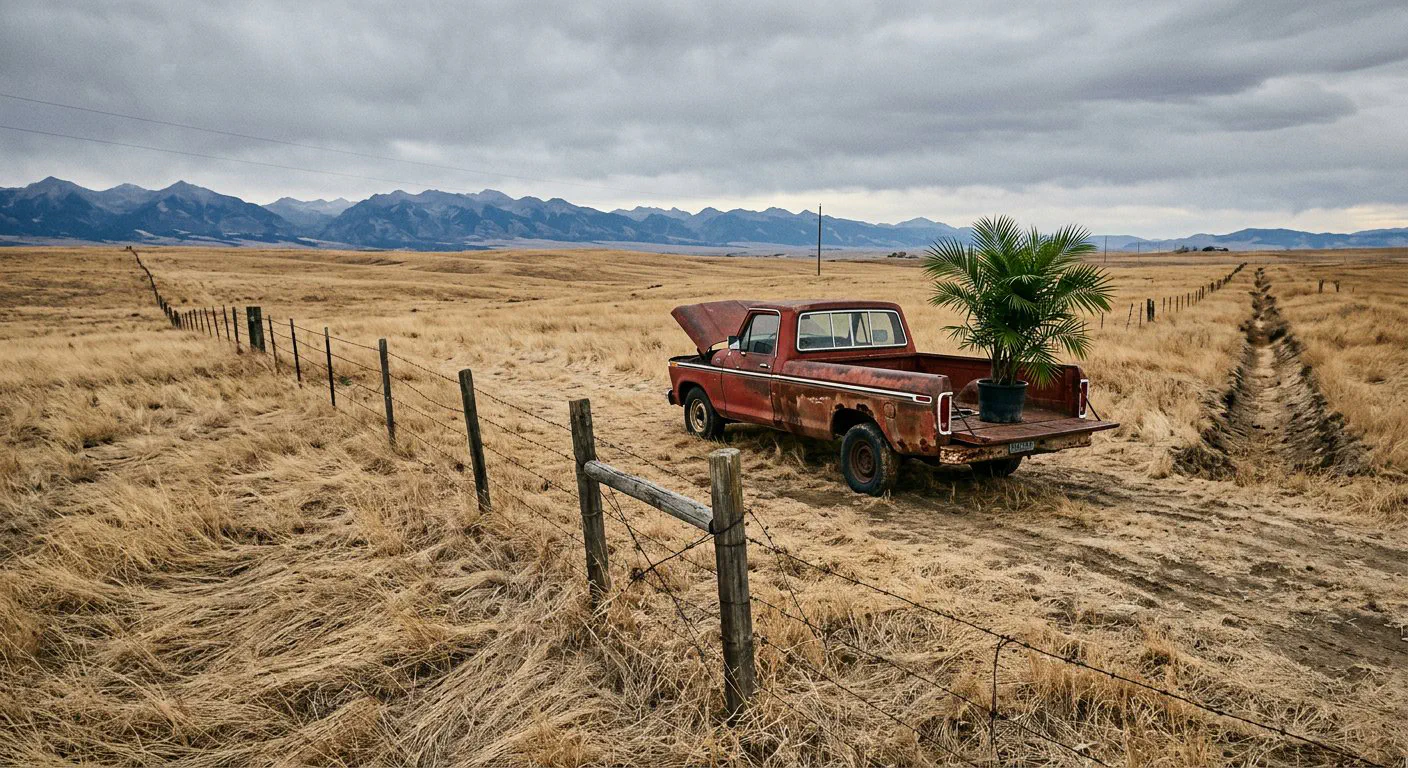
The wind in Livingston is a well-documented member of the community. It has a personality, a temper, and a tendency to relocate patio furniture to neighboring counties without permission. This week, city officials announced a bold initiative to plant 1,000 trees across the city, aiming to create a dense, leafy barrier against the gusts that frequently turn a casual walk to the mailbox into an unexpected aerobic workout.
“We aren’t looking for a park, exactly,” said local resident Dale Gust-Whacker, who spent much of Tuesday retrieving his recycling bin from a ditch near the Interstate. “We’re essentially trying to build a giant, wooden wall that moves slightly. If we can get enough branches in the way, maybe my hat will stay on my head for more than six minutes at a time.”
The project, dubbed ‘Operation Rooted,’ involves planting a diverse array of species that are sturdy enough to withstand the gale-force currents. Urban planners are hopeful that the trees will provide a buffer that makes downtown feel less like a wind tunnel and more like a place where you can hold a conversation without screaming.
Some observers have noted the irony of trying to grow tall things in a location where the primary weather pattern is essentially a horizontal sandblaster. Young saplings have been spotted vibrating in the breeze, bracing themselves for their first winter. City workers are reportedly bolting the root systems into the ground with heavy-duty rebar, just to give the trees a fighting chance during the seasonal gusts.
The project also hopes to assist with stormwater management, though most locals agree that if it ever actually rained sideways in Livingston, the trees would likely just end up in Billings by morning. Still, the community remains optimistic. There is a quiet beauty to the idea of a forest standing its ground in a town where nothing else—not even the lawn chairs—has ever managed to stay in one spot for very long.
Even if the trees don’t stop the wind, they will provide a convenient place for the residents to lean against when the gusts reach forty miles per hour. It is a comforting thought for those who live in a place where the landscape is always trying to leave.
Inspired by real local coverage. No actual journalism was harmed in the making of this article.