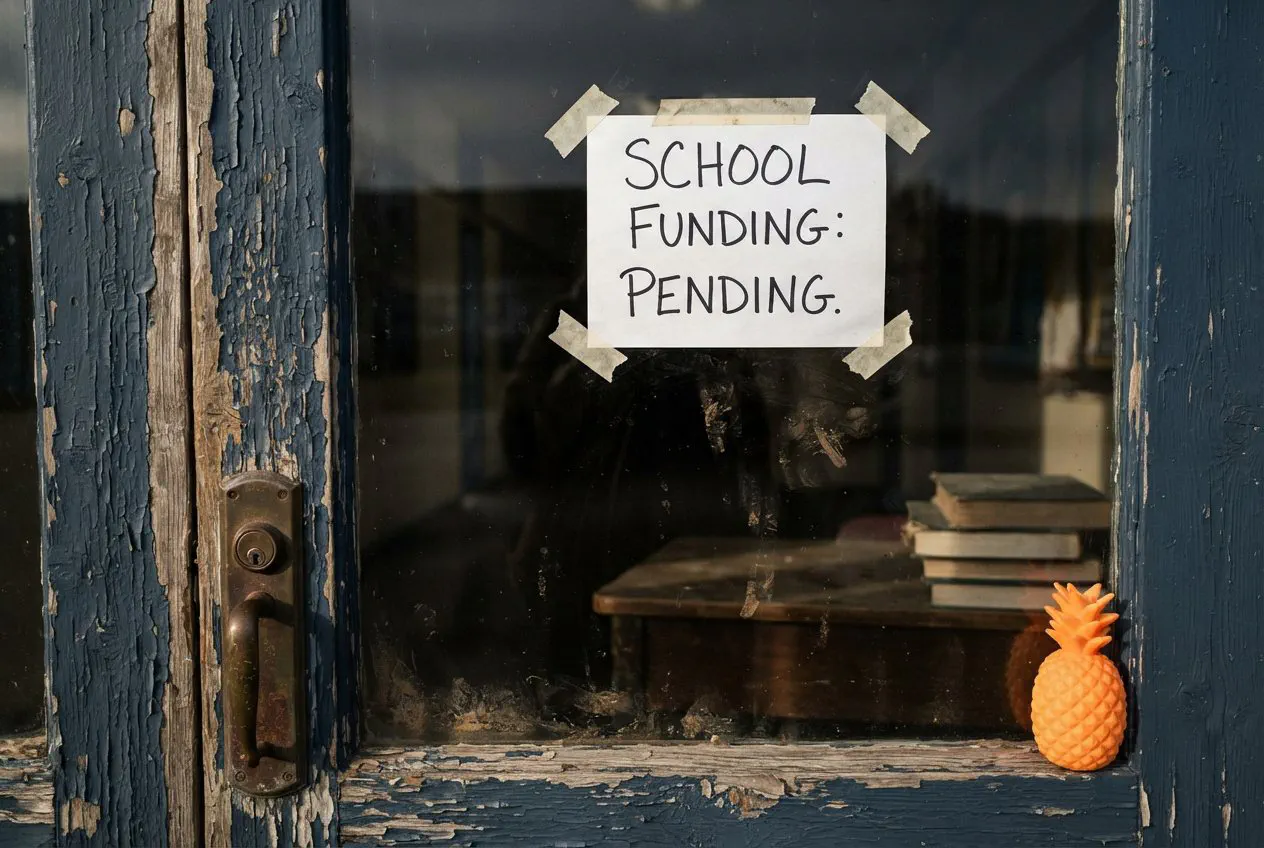
After thirteen months of rigorous, peer-reviewed deliberation held primarily in climate-controlled conference rooms in Helena, the Select Committee on Scholastic Fiscal Sustainability has finally released its findings. The core thesis of the 400-page document is that public schools—the buildings where children gather to learn—require a consistent flow of currency to remain operational.
“We spent a considerable amount of time looking at the relationship between textbooks and the ability to read,” said committee spokesperson Arthur Pringle, who arrived at the press conference in a vehicle worth more than the average teacher’s starting salary. “We have concluded that without a reliable source of funding, the structural integrity of a school becomes significantly more theoretical than practical.”
The commission examined a variety of funding models, including the traditional method of asking parents to bake enough sourdough loaves to keep the lights on during the winter months. They also considered a proposal to allow local ranchers to pay their property taxes in high-quality alfalfa, though that was eventually shelved due to concerns regarding classroom humidity.
The report also addressed the ongoing tension between property tax mill levies and the desire of residents to have their children educated somewhere other than the backseat of a Subaru. It turns out that when you add more luxury condos to the valley, the math regarding how many students can fit into a single mobile classroom becomes quite complicated.
“It is a fascinating paradox,” noted Dr. Helena Silt, a researcher who consulted on the report. “The community expresses an intense desire for world-class schools, yet they are also very committed to ensuring that the tax burden remains low enough to afford a seasonal pass at Big Sky. Our findings suggest that these two desires are, in fact, located on different planets.”
The commission suggests that if the state would like to continue having people who know how to operate machinery, balance checkbooks, or perform surgery, it might be advantageous to prioritize the purchase of chalk and erasers.
The committee will now take a three-month sabbatical to determine if the library should also have books.
They expect to have a finalized recommendation by the time the current kindergarteners are eligible for their first mortgages.
Inspired by real local coverage. No actual journalism was harmed in the making of this article.